
The complex nature of minerals on Earth, and their importance to humankind is one of my favorite subjects. It is really fascinating, whether considered in relation to, or even independently of, the large scope of human trace mineral synergies and other aspects of our nutritional needs.
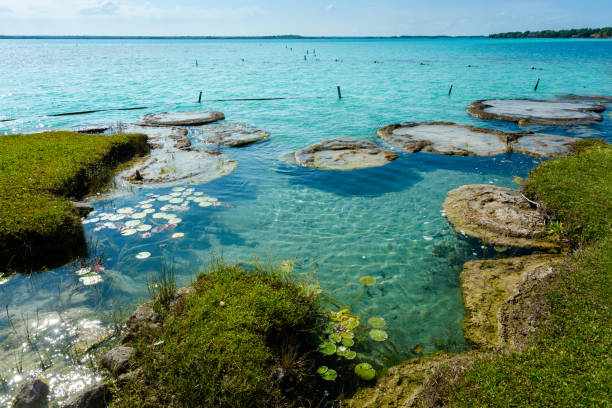
While rocks and mineral compounds are generally thought to be non-living and inorganic, there are some interesting possible exceptions to this rule of thumb. Stromaolites ( an example is pictured above) are types of rock created by biological processes, as opposed to metamorphic or stellar processes.
Science write Maya Wei-Haas wrote a fascinating articles in 2016, entitled “Life and Rocks May Have Co-Evolved on Earth” in Smithsonian magazine. The article broaches a fascinating convergence of subject matter, in the exploration of the origins of life on Earth, as well as the origins of many of the minerals on the planet.
In the article she talks with scientist and author Robert Hazen about the NOVA documentary Life’s Rocky Start. which gives some thought-provoking insights into this subject.
Robert Hazen is the author of many books on the nature of evolution of life on Earth, and many other subjects including The Story of Earth, Genesis : The Scientific Quest for Life’s Origin, and Symphony in C: Carbon and the Evolution of (Almost) Everything
“We see this intertwined co-evolution of the geosphere and biosphere. Life begets rocks; rock begets life.”- Robert Hazen, mineral physicist
Elisabeth Nader, a PhD scientist and author, wrote a fascinating article entitled “The Secret Lives of Minerals” in which she details the intricate mineral research of George Rossman, PhD, and Chi Ma, in using ultra-powerful microscopic exploration to also crack the code on some specifics of some beautifully precious stones at Caltech.
Nader writes “Since ancient times, colored stones have been enwrapped in mystery and intrigue, and assigned
a worth far greater than their earthy origins imply. Some 4,000 years ago, ancient Egyptians
decorated themselves and the walls of their tombs with green beryl—thought to symbolize immortality, and immortalized as emerald by the gem trade. Opal was the gemstone of love and hope for the Romans, who believed it could also render
its wearer invisible.
“Meanwhile, Australian aborigines suspected opal to be a devil luring men to their destruction. Minerals have assumed increasingly complex mythical properties over time. New Age practitioners wield rose quartz not only to treat physical maladies like kidney disease, sexual dysfunction, and migraines, but also to “stimulate the body’s love centers” to convert negative emotions to positive ones, calm hot tempers, and improve mental discipline and tranquility.
“But these are not the myths that Caltech professor of mineralogy George Rossman, PhD and member of the professional staff Chi Ma, who manages the Geological and Planetary Sciences (GPS) Division Analytical Facility, typically confront. Rather, they
seek to dispel less obvious misapprehensions— speculations and inferences on optical phenomena in minerals that have become groundlessly entrenched in the scientific literature. To do so, they pursue the true origins of color, opalescence,
and rare patterns like stars, flames, and rainbows. And, if they discover a new mineral while they’re at it, so much the better”
When I consider this ongoing research regarding the origins of many different minerals, I think of the debate regarding the origins of humates, the complex mineral compounds containing humic and fulvic acids. This Black Earth has been shown to be of primary importance in human health , agriculture and potentially many other aspects of life on this planet.
While we generally know that humates are formed when ancient plant material is broken down by microorganisms, by sometimes millions of years, they are multiple theories of the specifics of the origins of these humates.
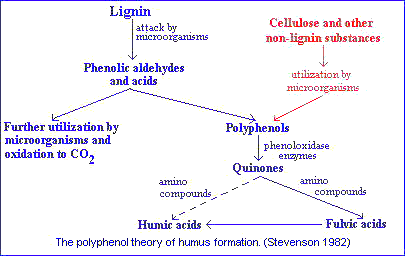
So it goes, as they say, with nature. As human discovery gets closer and closer to understanding more about the world around us, all the times more questions are raised. One can only hope that human society will endeavor to answer these questions with integrity and a focus on ecological balance and sustainable development as time goes on.
 Botanical Nutrition
Leave a comment